Golfran Rivera brings a unique blend of military service and primary care expertise to his work as a family medicine provider and clinic owner. A former U.S. Army Psychological Operations specialist and graduate of the Inter-Service Physician Assistant Program (IPAP), Golfran integrates his rich experiences, from deployment to private practice, into a career defined by personal connection and continuity of care.
From Military Service to Medicine
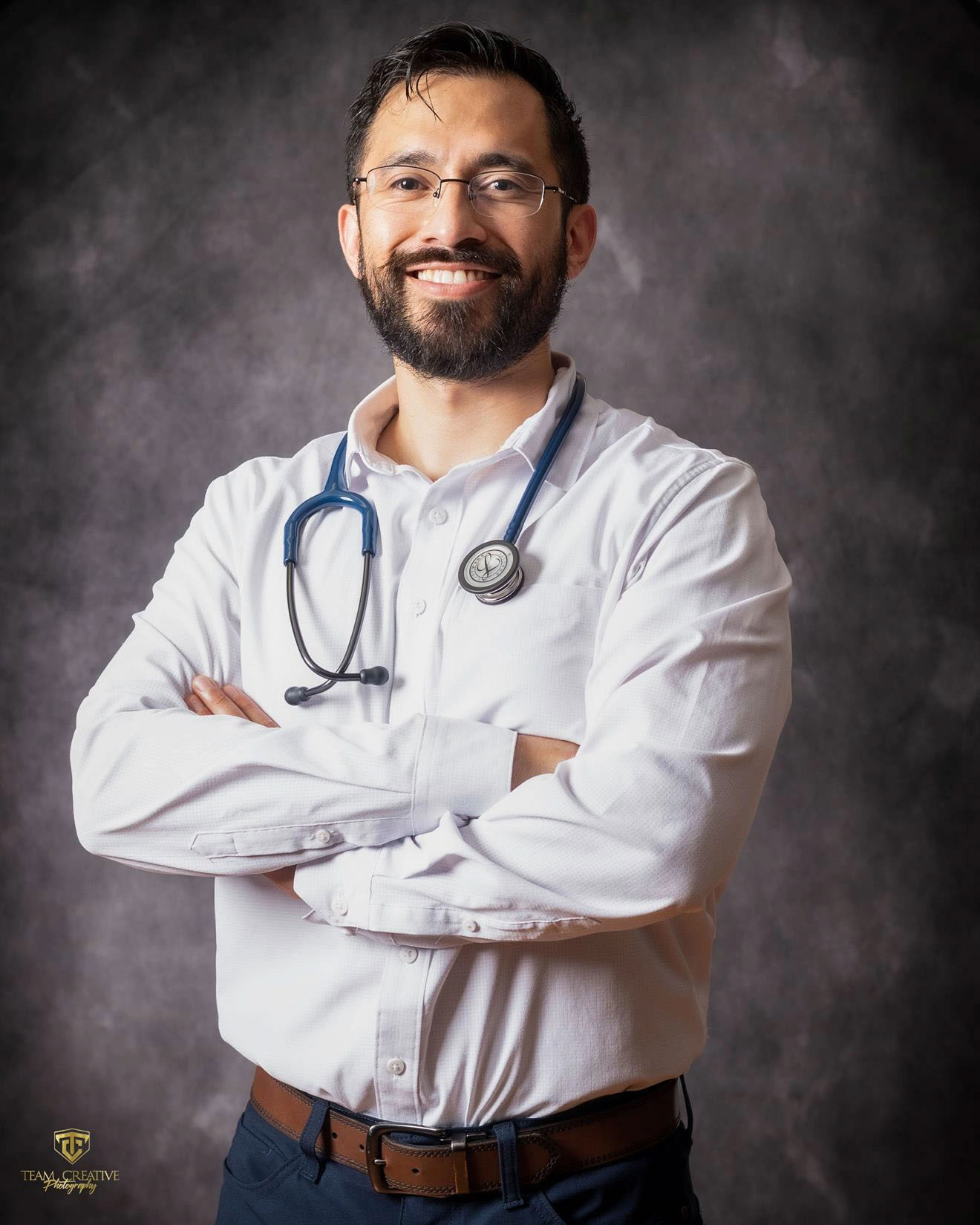
“I actually did my PA training in the military through the Inter-Service Physician Assistant Program,” Golfran shares. “I was first really exposed to the profession when I was in the infantry. My wife was a medic working with PAs. She had talked about the program. But it wasn’t until like 10 years after that where I seriously considered applying.”
During his time as a primary care provider for service members, Golfran witnessed the lasting impact of military service and the mental health needs that followed. “It was working with service members who had been part of the withdrawal from Afghanistan, seeing their face and hearing some of their stories, that I really started to take mental health very seriously in primary care,” he explains. “I started making it a point to set aside time to just talk with my soldiers, hear their stories, give them room to express things they hadn’t had a chance. And I’ve carried that forward into my primary care practice now.”
Family Medicine and the Power of Story
Today, Golfran owns and operates a direct primary care clinic focused on family medicine and sports medicine. He finds deep fulfillment in the relationships he builds with patients over time. “I’m big on stories. I’m big on human experience and stories,” he says. “In family medicine, you get to get to know that life. And so you see not just the improvement in a condition, but rather how the story changes for them for the better.”
Sports medicine also plays a key role in his practice. “My favorite is some of my older patients who didn’t know they were capable of moving the way they do now, learning to trust their bodies,” he adds.
Heritage and Connection
This September, as we celebrate Hispanic Heritage Month, Golfran reflects on how his background enriches his work. “It’s a special privilege that I take seriously,” he shares. “You can see the tension and the stress that somebody carries. And then they open their mouth, they speak Spanish, and then I respond in Spanish and you just see them light up and the tremendous relief of like, oh. And they’ll tell you, you know, the other provider was phenomenal, I love them, but they didn’t understand me. And so being able to bring that to bear is a blessing to me.”
Heritage and Connection
When asked what he might be doing if he weren’t practicing medicine, Golfran doesn’t hesitate. “Teaching. Yeah, full-time teaching,” he says. “That’s why I’m creating a course on some of the disorders that I see for patients to learn. You’d probably find me either at a high school biology class or a community college anatomy class.”
Thank you to Golfran for taking the time to share his PA journey!
Have a recommendation for an NCAPA member to highlight?
Send an email to tommy.wellenhofer@ncapa.org
Written by Thomas Wellenhofer
NC Academy of PAs Marketing & Communications Coordinator